
Glassware plays a quiet but powerful role in modern industry. From chemical plants and laboratories to food processing and pharmaceutical production, certain materials must handle heat, pressure, and aggressive chemicals without breaking down. One material stands out for its strength and reliability: borosilicate glassware.
You’ve probably seen it without realizing it. Laboratory flasks, chemical reactors, sight glasses, and heat-resistant tubing often rely on this material. But what exactly is borosilicate glassware? Why is it trusted across demanding industries? And what makes it different from ordinary glassware?
This article explains the meaning, composition, properties, benefits, and real-world applications of borosilicate glassware in clear, practical terms.
Borosilicate Glassware: Meaning and Composition
Borosilicate glassware is a type of glassware made with silica and boron oxide as its primary components. The addition of boron gives it properties that regular glassware simply cannot match.
Standard glassware, like soda-lime glassware, expands and contracts quickly when exposed to heat. This leads to cracking, breakage, or sudden failure. Borosilicate glassware behaves differently. It handles temperature changes much better and stays stable even under harsh conditions.
What is borosilicate glassware made of?
The main components include:
- Silica (SiO₂) – forms the structural base
- Boron oxide (B₂O₃) – improves heat resistance and reduces expansion
- Sodium oxide (Na₂O) – helps lower the melting temperature during production
- Aluminum oxide (Al₂O₃) – improves durability and chemical resistance
These raw materials are carefully combined during the manufacture of borosilicate glassware parts. The exact composition determines strength, clarity, and resistance levels.
A commonly referenced standard is borosilicate glassware 3.3, which refers to its very low thermal expansion coefficient of approximately 3.3 × 10⁻⁶ per Kelvin. This low expansion rate is one of the reasons why borosilicate glassware performs so well in high-temperature environments.
How Is Borosilicate Glassware Made?
The production of borosilicate glassware involves a controlled melting and forming process. It requires precise temperature management and careful shaping.
Borosilicate Glassware Manufacturing Process
- Raw material preparation
Silica sand, boron oxide, soda ash, and alumina are measured and mixed in exact proportions. - Melting stage
The mixture is heated in specialized furnaces at temperatures above 1,200°C. This transforms the raw materials into molten glass. - Forming and shaping
The molten material is shaped into tubes, vessels, borosilicate glass components, or custom equipment, depending on industrial needs. - Annealing process
The glassware is slowly cooled to relieve internal stress. This step prevents cracking or future failure. - Inspection and finishing
Final borosilicate glassware components are inspected for clarity, strength, and dimensional accuracy.
This controlled process ensures consistent quality, especially when producing industrial equipment used in chemical and pharmaceutical environments.
Material Properties of Borosilicate Glassware
The popularity of borosilicate glassware comes from its unique physical and chemical properties. These properties allow it to perform where many materials fail.
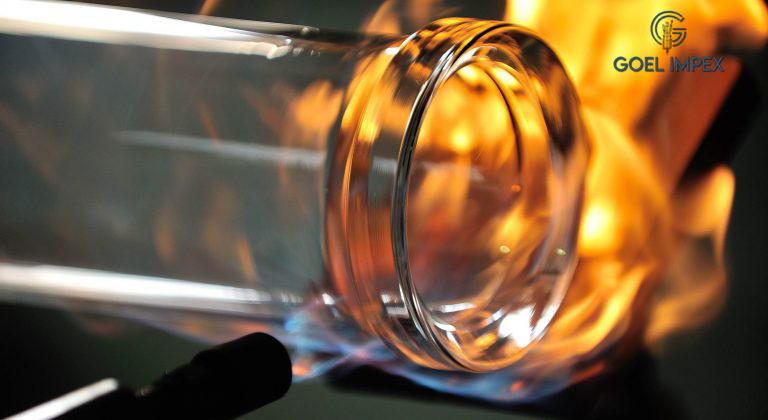
1. Excellent Thermal Resistance
One of the most well-known advantages is its ability to handle high temperatures.
Typical borosilicate glassware temperature range:
- Continuous operation: up to 450°C
- Maximum short-term exposure: up to 500°C
- Thermal shock resistance: can handle sudden changes of about 160°C
This means it can move from hot to cooler conditions without cracking, something ordinary glassware cannot do safely.
This wide temperature range for borosilicate makes it ideal for reactors, heat exchangers, and laboratory heating applications.
2. Low Thermal Expansion
Thermal expansion refers to the increase in size of a material when heated.
Borosilicate glassware has extremely low expansion. This reduces stress during heating and cooling cycles.
This property prevents the following:
- Cracking
- Structural deformation
- Failure under heat stress
This is why borosilicate glassware is often used in systems with frequent temperature fluctuations.
3. Outstanding Chemical Resistance
Borosilicate glassware offers excellent chemical compatibility. It resists corrosion from most acids, solvents, and chemical compounds.
It performs well when exposed to:
- Acids such as sulfuric acid and nitric acid
- Organic solvents
- Salt solutions
- Pharmaceutical compounds
It does not react easily with most chemicals, which helps maintain product purity.
This makes borosilicate glassware essential in chemical industry environments where contamination cannot be tolerated.
4. High Mechanical Strength
Borosilicate glassware has strong structural stability compared to standard glassware.
It offers:
- Good tensile strength
- Resistance to internal pressure
- Durability during handling and operation
This allows borosilicate glass components to operate safely in industrial equipment like pressure vessels and process systems.
5. Optical Clarity and Transparency
Transparency is not just about appearance. It serves a functional purpose.
Clear borosilicate glassware allows operators to
- Monitor chemical reactions
- Observe fluid flow
- Check for contamination
- Inspect process performance
This visual access improves safety and operational control.
Temperature Limits and Heat Performance
Many industries ask a simple question: how much temperature can borosilicate glassware withstand?
The answer depends on exposure duration and conditions.
Typical limits include the following:
- Continuous use temperature: up to 450°C
- Maximum temperature limit: around 500°C
- Softening point: approximately 820°C
- Thermal shock tolerance: about 160°C difference
This heat resistance allows borosilicate glassware to operate safely in high-temperature industrial systems.
The borosilicate glassware 3.3 temperature range is widely trusted in chemical processing equipment and laboratory applications.
Why Industries Prefer Borosilicate Glassware Over Standard Glassware
Ordinary glassware may be cheaper initially, but it often fails faster in demanding conditions.
Borosilicate glassware provides long-term reliability.
Major advantages include the following:
Superior heat resistance
Handles high-temperature operations safely.
Excellent chemical stability
Prevents reactions with stored or processed materials.
Long service life
Maintains performance over extended use.
High safety levels
Less risk of cracking or sudden failure.
Clear visibility
Supports process monitoring.
These benefits reduce maintenance costs and downtime.
Applications of Borosilicate Glassware Across Industries
Borosilicate glassware is used in many industrial sectors. Its versatility and reliability make it a preferred material.
1. Chemical Industry Equipment
The borosilicate glassware chemical industry relies on the following:
- Glass reactors
- Storage vessels
- Condensers
- Pipelines Components
- Sight glasses
These components must handle aggressive chemicals without corrosion.
Borosilicate glassware maintains purity and prevents unwanted reactions.
2. Pharmaceutical Manufacturing
Pharmaceutical production demands extremely clean environments.
Borosilicate glassware is used in:
- Drug processing vessels
- Sterile equipment
- Mixing systems
- Laboratory testing tools
Its chemical resistance ensures product safety and consistency.
3. Laboratory Glassware and Research Facilities
Laboratories depend heavily on borosilicate glassware.
Common examples include:
- Beakers
- Flasks
- Test tubes
- Measuring cylinders
These tools must handle repeated heating and cooling cycles.
Borosilicate glassware performs reliably over long periods.
4. Food and Beverage Processing
The food industry uses borosilicate glassware in production and inspection systems.
It helps maintain hygiene and prevents contamination.
It is used in:
- Processing lines
- Quality inspection systems
- Liquid handling equipment
5. Industrial Process Systems
Borosilicate glass components are widely used in industrial processing plants.
Applications include:
- Heat exchangers
- Flow monitoring systems
- Corrosion-resistant pipelines
- Reaction systems
Its durability improves operational safety and reliability.
Borosilicate Glassware Components Used in Industrial Systems
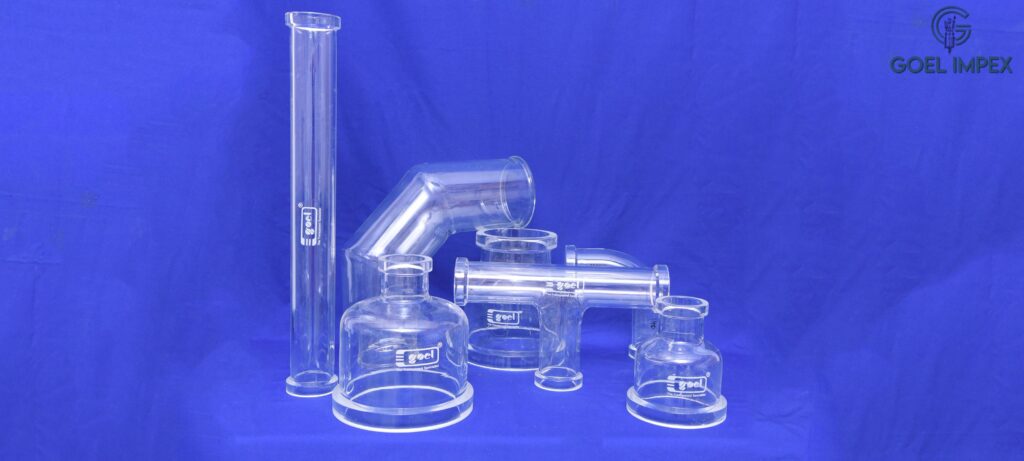
Industrial borosilicate glassware is rarely a single piece. It usually consists of multiple components assembled into larger systems.
Common borosilicate glass components include:
- Glass tubes
- Sight glasses
- Reaction vessels
- Columns
- Condensers
- Connectors and joints
Each component plays a role in maintaining system performance.
The manufacture of borosilicate glass parts requires precision to ensure compatibility and strength.
Borosilicate Glassware vs. Regular Glassware
Understanding the difference helps explain why borosilicate glassware is preferred.
| Property | Borosilicate Glassware | Regular Glassware |
| Heat resistance | High | Low |
| Chemical resistance | Excellent | Moderate |
| Thermal expansion | Very low | Higher |
| Durability | Strong | More fragile |
| Industrial use | Extensive | Limited |
These differences make borosilicate glassware suitable for demanding environments.
Safety and Reliability Benefits
Safety is a top concern in industrial operations.
Borosilicate glassware offers multiple safety advantages:
- Less risk of cracking during temperature change
- Strong resistance to chemical damage
- Clear visibility for monitoring
- Stable performance over time
These qualities help reduce accidents and equipment failures.
Environmental and Economic Advantages
Borosilicate glassware also offers environmental benefits.
It is:
- Long-lasting
- Reusable
- Resistant to wear
This reduces waste and replacement frequency.
Over time, this leads to cost savings and improved operational efficiency.
Choosing the Right Borosilicate Glassware Manufacturer
Quality matters when selecting industrial glassware. Manufacturing precision affects performance, safety, and lifespan.
Important factors include:
- Material quality
- Manufacturing standards
- Custom fabrication capability
- Testing and inspection processes
- Industry experience
Reliable borosilicate glassware manufacturers follow strict production standards to ensure consistent performance.
Companies like ours produce borosilicate glassware components designed for industrial and laboratory use, helping industries maintain safe and reliable systems.
The Future of Borosilicate Glassware in Modern Industry
Industrial systems continue to demand materials that can handle higher temperatures, aggressive chemicals, and long operating cycles.
Borosilicate glassware remains one of the most trusted materials for these environments.
Its unique combination of thermal stability, chemical resistance, and durability ensures its continued role across chemical processing, pharmaceuticals, and research facilities.
As industries grow and standards increase, the need for reliable borosilicate glassware will only continue to rise.
Closing Thoughts…
Borosilicate glassware is far more than ordinary glassware. Its composition, strength, and resistance to heat and chemicals make it essential across many industries.
From laboratory tools to large-scale industrial reactors, borosilicate glassware delivers safety, reliability, and long service life. Its low thermal expansion and strong chemical resistance allow it to perform where other materials fail.
For industries that depend on precision and durability, choosing high-quality borosilicate glassware is not just a preference. It is a necessity. Manufacturers such as Goel Impex continue to support industrial operations by producing reliable borosilicate glassware components that meet demanding industrial requirements.





One reply on “What Is Borosilicate Glassware? Properties, Benefits & Applications”
[…] you are looking for high-quality borosilicate glassware, Goel Impex offers a range of reliable and durable products designed for various applications. With […]