
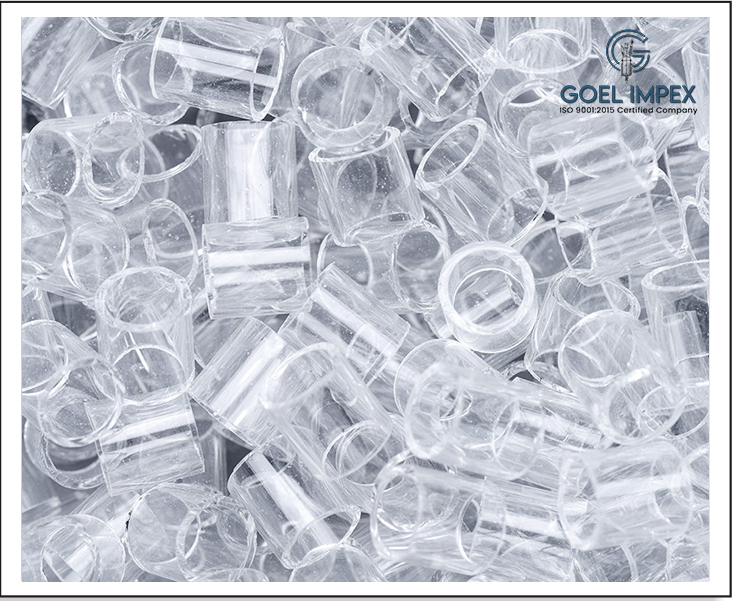
If you’ve ever walked through a chemical plant or stood near a distillation unit, you’ve probably seen those small, cylindrical pieces packed tightly inside large vertical columns. Most people walk right past them without a second thought. But those little rings, known as Raschig rings, are doing some seriously important work inside those towers.
They may look simple, and in a way, they are. But their simplicity is exactly what makes them so effective. Let’s get into what Raschig rings actually are, where they come from, what they’re made of, how they’re used, and why they continue to be a go-to choice across so many industries.
A Quick Bit of History Worth Knowing
Raschig rings were invented in the early 20th century by a German chemist named Friedrich Raschig. He was looking for a way to increase the surface area inside distillation columns without blocking the flow of liquids and gases. His solution was elegant: a hollow cylinder, open at both ends, with equal height and diameter.
The design worked remarkably well. It allowed vapors to rise and liquids to trickle down through a packed bed while maximizing the contact between the two phases. That contact is what drives separation, absorption, and other mass transfer processes.
Over a hundred years later, the basic design remains largely unchanged. That’s not because no one has tried to improve it. It’s because the ring does its job well, it’s inexpensive to produce, and it performs reliably across a wide range of temperatures, pressures, and chemical environments.
So, What Exactly Are Raschig Rings?
At the most basic level, a Raschig ring is a short hollow cylinder. Imagine cutting a piece of pipe into small sections, each one about as tall as it is wide. That’s essentially what you get.
They’re typically used as packing material inside industrial columns and towers. When you pour thousands of them into a column, they form a random, loosely packed bed with a lot of open space between them. That open space allows fluids to flow through without too much resistance, while the surface of the rings provides the area needed for mass transfer to happen.
The size of the rings varies depending on the application. Common sizes range from about 6 mm to 100 mm in diameter. Smaller rings offer more surface area per unit volume but also create more resistance to flow. Larger rings let fluids move more freely but provide less contact area. Choosing the right size is part of the engineering work that goes into designing a packed column.
What Are Raschig Rings Made Of?
One of the reasons Raschig rings are so widely used is that they can be made from a variety of materials. This makes them adaptable to a broad range of chemical processes.
Glass Raschig Rings
Glass is probably the most well-known material for Raschig rings, especially in laboratory settings and industries where chemical purity is important. Glass Raschig rings are chemically inert, meaning they won’t react with most substances passing through the column. They’re transparent, easy to inspect, and resistant to many acids and solvents.
You’ll find glass rings used frequently in distillation setups for pharmaceuticals, fine chemicals, and research labs. When you need to separate or purify a substance without any contamination from the packing material itself, glass is often the right call.
That said, glass isn’t suitable for every situation. It’s brittle, so it can break under mechanical stress or thermal shock. It also doesn’t perform well with hydrofluoric acid, which etches glass. For high-pressure or high-vibration environments, other materials are usually a better fit.
Ceramic Raschig Rings
Ceramic rings are a popular choice for high-temperature applications and environments where strong acids or bases are present. They can handle temperatures well above what most polymers can tolerate, and they’re chemically resistant to a wide range of corrosive substances.
You’ll commonly see ceramic Raschig rings used in sulfuric acid production, gas scrubbing, and various petrochemical processes. They’re heavier than polymer alternatives, which can be a consideration when designing a column, but their thermal and chemical stability make them reliable in tough conditions.
Plastic and Polymer Raschig Rings
Polypropylene (PP), polyethylene (PE), and PVC are all used to make Raschig rings. These plastic versions are lightweight, inexpensive, and resistant to many chemicals. They don’t corrode, which gives them a clear advantage over metals in certain environments.
The downside is temperature. Most plastic rings start to deform or lose structural integrity at elevated temperatures. For processes running below around 100 to 120 degrees Celsius, plastic rings can work well. For anything hotter, you’d typically look toward ceramic or metal options.
Metal-Raschig-Ringe
Stainless steel, carbon steel, and other alloys are used when strength and high-temperature performance are both required. Metal rings are sturdy, they pack uniformly, and they can handle temperatures that would destroy ceramic or polymer alternatives.
They’re commonly used in applications like gas processing, where the column might be under significant pressure. The trade-off is cost. Metal rings are considerably more expensive than ceramic or plastic, so they’re usually reserved for applications where their specific properties are genuinely necessary.
Where Are Raschig Rings Actually Used?
The range of industries that rely on Raschig ring packing is broader than most people realize. Let’s look at some of the key areas.
Distillation
This is probably the most common application. Raschig rings in distillation columns help separate mixtures based on differences in boiling points. As vapors rise and liquids fall through the packed bed, the components with different volatilities gradually separate. The more surface area available for this vapor-liquid contact, the more efficient the separation.
You’ll find this setup in everything from petroleum refining to producing high-purity ethanol for pharmaceutical use. The glass versions are especially common in laboratory and small-scale distillation setups, where purity and transparency matter.
Gas Absorption and Scrubbing
Gas scrubbers are used to remove harmful or unwanted components from gas streams. Raschig rings inside these towers help maximize contact between the rising gas and the scrubbing liquid, allowing the liquid to absorb or react with the target compounds.
This is used in air pollution control systems, chemical manufacturing, and anywhere that exhaust gases need to be cleaned before release. Ceramic rings tend to perform well in these setups due to their resistance to acidic gases and high operating temperatures.
Liquid-Liquid Extraction
In some processes, you need to separate components that are mixed in a liquid phase rather than a gas-liquid system. Raschig rings can be used to improve contact between two immiscible liquids in extraction columns, helping one liquid pull specific compounds out of the other.
Cooling Towers
Some cooling tower designs use random packing like Raschig rings to increase the surface area for heat and mass transfer between water and air. As hot water trickles down through the packing and air flows upward, heat exchanger efficiency improves as evaporation removes excess heat and helps cool the circulating water.
Chemical Reactors
In some reactor designs, Raschig rings serve as inert packing to support catalysts, distribute flow evenly, or fill dead spaces. They’re also sometimes used in reactive distillation, where chemical reaction and separation happen simultaneously in the same column.
Laboratory and Pilot-Scale Work
Glass Raschig rings are widely used in labs for small-scale distillation, extraction, and separation studies. Their inert nature and transparency make them easy to work with when studying chemical processes or testing new procedures before scaling up.
How Do They Compare to Other Packing Options?
Raschig rings aren’t the only type of random packing available. Over the decades, newer designs like Pall rings, Berl saddles, and Intalox saddles have been developed, each with its own characteristics.
Compared to these alternatives, Raschig rings tend to have lower mass transfer efficiency per unit of pressure drop. In plain terms, other packing designs often let you achieve the same separation with a shorter column or lower energy use.
So why are Raschig rings still so commonly used?
First, cost. Raschig rings are among the least expensive packing options available, particularly in ceramic and glass. For applications where the column height isn’t severely limited and pressure drop isn’t a major concern, they offer solid performance at a low price.
Second, availability. They’ve been around for over a century. Manufacturers and suppliers worldwide produce them in a wide range of sizes and materials. Getting replacements or scaling up a system is rarely complicated.
Third, reliability. In environments where temperature stability, chemical resistance, or long service life matters most, a well-chosen Raschig ring material can outperform more geometrically complex packings that offer less surface per unit of structural integrity.
Right Size and Material for Raschig Rings
If you’re sourcing Raschig rings for a specific process, there are a few practical considerations worth keeping in mind.
The ring size should roughly match the column diameter. A general guideline is that the column diameter should be at least eight to ten times the ring diameter. If the rings are too large relative to the column, you get channeling, where fluids find preferred paths through the bed instead of flowing evenly. If the rings are too small, the pressure drop across the bed becomes too high.
Material selection depends heavily on what the rings will be exposed to. Glass is ideal when chemical purity is a priority and temperatures are moderate. Ceramic works well for hot, corrosive environments. Plastic suits low-temperature applications with moderate chemical exposure. Metal handles high pressure, high temperature, and physical stress.
If you’re working with something unusual, like a particularly aggressive solvent or an extreme temperature range, it’s worth consulting with a supplier who has experience with packing material selection. Getting this decision wrong can mean poor column performance or premature material failure.
Are There Any Limitations Worth Knowing About?
Yes, and being honest about them is part of making a good decision.
Raschig rings, especially in glass and ceramic, are brittle. Dropping them or allowing them to settle unevenly under vibration can lead to breakage, which creates fines that clog the column and reduce performance. Careful handling during loading is important.
In very large columns, the weight of the packing bed itself can become a structural concern. Ceramic rings in particular are heavy, and a tall bed can exert a significant load on the column support structure.
As mentioned earlier, Raschig rings generally have lower efficiency compared to some newer packing designs. If you’re trying to minimize column height or energy consumption, you might get better results with a more modern random packing or even structured packing.
And while glass rings are chemically inert against most substances, they’re not suitable for all applications. Hydrofluoric acid, for instance, attacks glass, so that material would be completely wrong in that context.
None of these limitations makes Raschig rings a poor choice. They just reinforce the importance of matching the packing material to the specific requirements of the process.
Why Industries Keep Coming Back to Raschig Rings
Something is reassuring about a product that has been in use for more than a hundred years. It hasn’t survived because people are set in their ways. It’s survived because it keeps doing the job.
Raschig rings are predictable. Their behavior in packed columns is well understood, extensively documented, and relatively easy to model. Engineers who are designing or troubleshooting a system don’t have to guess about how the packing will perform.
They’re also available globally. Whether you’re running a plant in Europe, a lab in South Asia, or a research facility anywhere else, finding Raschig rings in the right size and material is generally straightforward. That kind of supply chain reliability matters more than most people realize when you’re trying to keep a process running.
And for organizations working with limited budgets, the cost advantage of glass or ceramic rings over more expensive high-performance packing options can be substantial, especially when scaling up from laboratory to production.
A Note on Sourcing Quality Raschig Rings
Not all Raschig rings are created equal. When you’re buying packing material for industrial or laboratory use, the consistency of the rings matters. If the dimensions vary significantly from piece to piece, the packed bed won’t form uniformly, and you’ll end up with channeling or uneven performance.
Look for suppliers who can provide material certifications, especially for glass and ceramic rings used in pharmaceutical or food-grade applications. Knowing the exact composition and quality of what you’re putting into your column is worth the extra attention.
For labs and smaller operations in India, Goel Impex is one of the manufacturers and suppliers offering glass Raschig rings along with other laboratory and industrial glassware. Having a domestic source for these materials can simplify procurement and reduce lead times for replacement stock.
Wrapping Up
Raschig rings are one of those things that don’t get a lot of attention but quietly support a huge amount of industrial and laboratory work. From distillation in chemical plants to scrubbing emissions in industrial exhaust systems to small-scale separations in research labs, these simple cylinders show up in a lot of places.
Understanding what they’re made of, what sizes are appropriate for different columns, and where their strengths and limitations lie helps you make better decisions when selecting packing material. The right Raschig ring in the right application performs reliably, lasts a long time, and keeps the process running the way it should.
Whether you’re an engineer, a procurement manager, a lab technician, or just someone trying to understand what’s inside those towers you see at industrial sites, the Raschig ring is worth knowing about. Simple in design, broad in application, and proven over decades of real-world use.